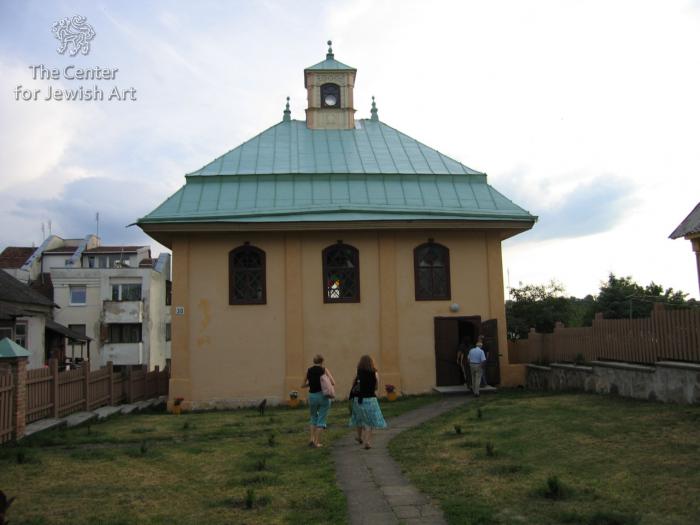
In 1397-1398, Grand Duke Vytautas of Lithuania invited Karaites from the Crimea to settle in Troki, his de facto capital city. By that time, it was already home to a Jewish community, albeit a small one: A few Jewish families had settled in Troki prior to that. However, the several hundred Karaite families who settled in Troki in the 14th-15th centuries pushed this tiny Jewish community aside, especially since the Karaites carried out the economic functions that were traditionally associated with Jews in Europe: financial operations, commerce, leasing monopolies on certain trades, etc. Lithuanian law treated Jews and Karaites as one and the same community, and both groups enjoyed the same rights and suffered from the same restrictions. By 1680, as a result of the wars and uprisings that swept through the Polish-Lithuanian Commonwealth (Rzeczpospolita in Polish) in the 17th century, the Karaite community of Troki had dwindled to only thirty families; meanwhile, the local Jewish community began to grow. According to the census of 1897, there were 1,112 Jews in Troki, making up about a third of the town's population.
The Jewish population of Troki suffered from World War I and the ensuing Polish-Lithuanian war of 1919-20. The Polish census of 1931 recorded only about 400 Jews in the town. In September 1939, World War II began, and Troki was occupied by the Soviets. That same year, the Soviets handed the town over to the still independent Lithuania. However, in 1940 Lithuania itself was annexed by the USSR, and the residents of Troki once again found themselves under Soviet control.
In June 1941, the Soviet-German War broke out, and Troki was occupied by the Germans on June 24. Many restrictions were imposed upon the local Jews; they had to perform forced labor, and a Jewish council was established. In September 1941, a ghetto was set up in the town. It housed both the Jews of Troki itself (about 400) and those from the nearby towns of Aukštadvaris, Landwarów (Lentvaris in Lithuanian), Onuškis, and Rudziszki, as well as the village of Žydkaimis.
On September 30, 1941, the inmates of the Troki Ghetto were murdered by a squad of the SS Einsatzkommando 3, in collaboration with the Ypatingasis Būrys (Lithuanian Special Squad) and with the assistance of the local Auxiliary Police. According to a German report, 1,446 Jews were killed on that day.
Troki was liberated by the Red Army in July 1944.
Troki
Wilno District
Wilno Region
Poland (today Trakai
Lithuania)
54.636;24.934
Photos
Victims' Names
The Karaite Kenessa in Trakai, 2005. Photographer: Vladimir Levin.
Center for Jewish Art, The Hebrew University of Jerusalem, Copy YVA 15113780