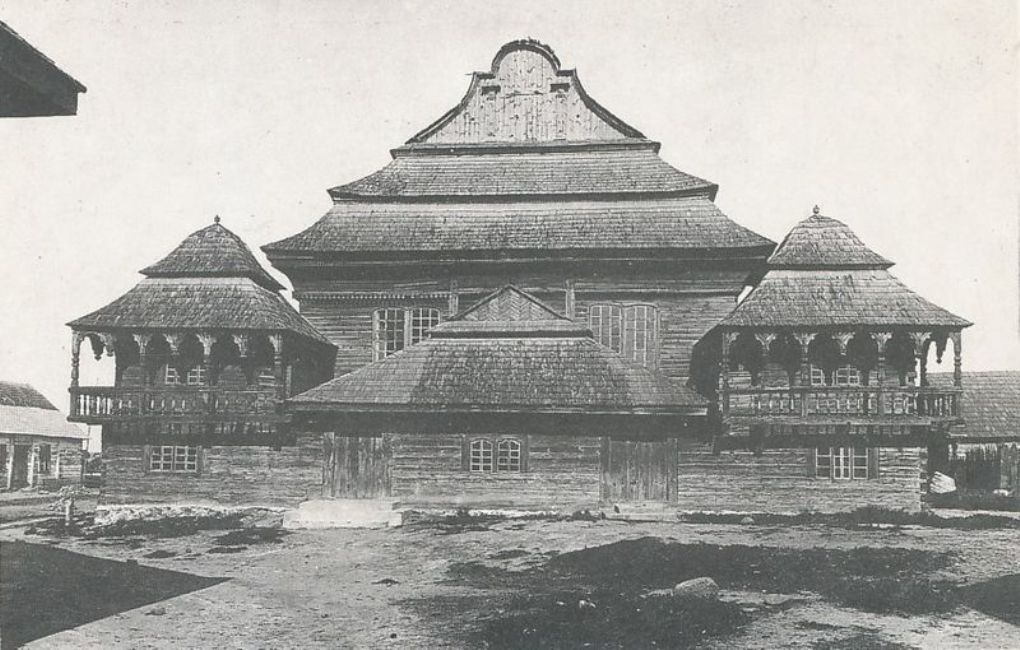
The wooden synagogue in Wołpa, destroyed and burned by the Nazis
YVA, Photo Collection, 14616978
Related Murder Sites


In the interwar period, Zionism became increasingly popular among the younger generation of the Jews of Wołpa. The four-year "Torah va-Avodah" school was opened in the town, under the aegis of the religious Zionist HaMizrachi movement. The town also had cells of other Zionist youth movements: Poale Zion, HeHalutz, Hashomer Hatzair, etc.
On September 17, 1939, following the outbreak of World War II, Wołpa and its surroundings were occupied by the Red Army and annexed to Soviet Belarus. On June 22, 1941, Nazi Germany invaded the Soviet Union, and on July 1, after a day of aerial bombardment, German troops entered the town. Local Jews were rounded up and sent to perform forced labor, mostly in demolishing the bombed-out Jewish houses and building the office of the German Amtskommissar (to this end, the salvageable bricks, and other available materials, were used). In the fall of 1941, the occupiers set up a ghetto in Wołpa. In the spring of 1942, they permitted local Jews to work (for free) in agriculture.
On November 2, 1942, the Germans assembled all the Jews of Wołpa in the church square and sent them to the Wołkowysk transit camp. At the same time, they singled out sixty-six Jews and shot them at the local Jewish cemetery. The Jewish deportees from Wołpa shared the fate of the other inmates of the Wołkowysk transit camp, being deported to the Nazi death camps.
Wołpa was liberated by the Red Army in July 1944.
