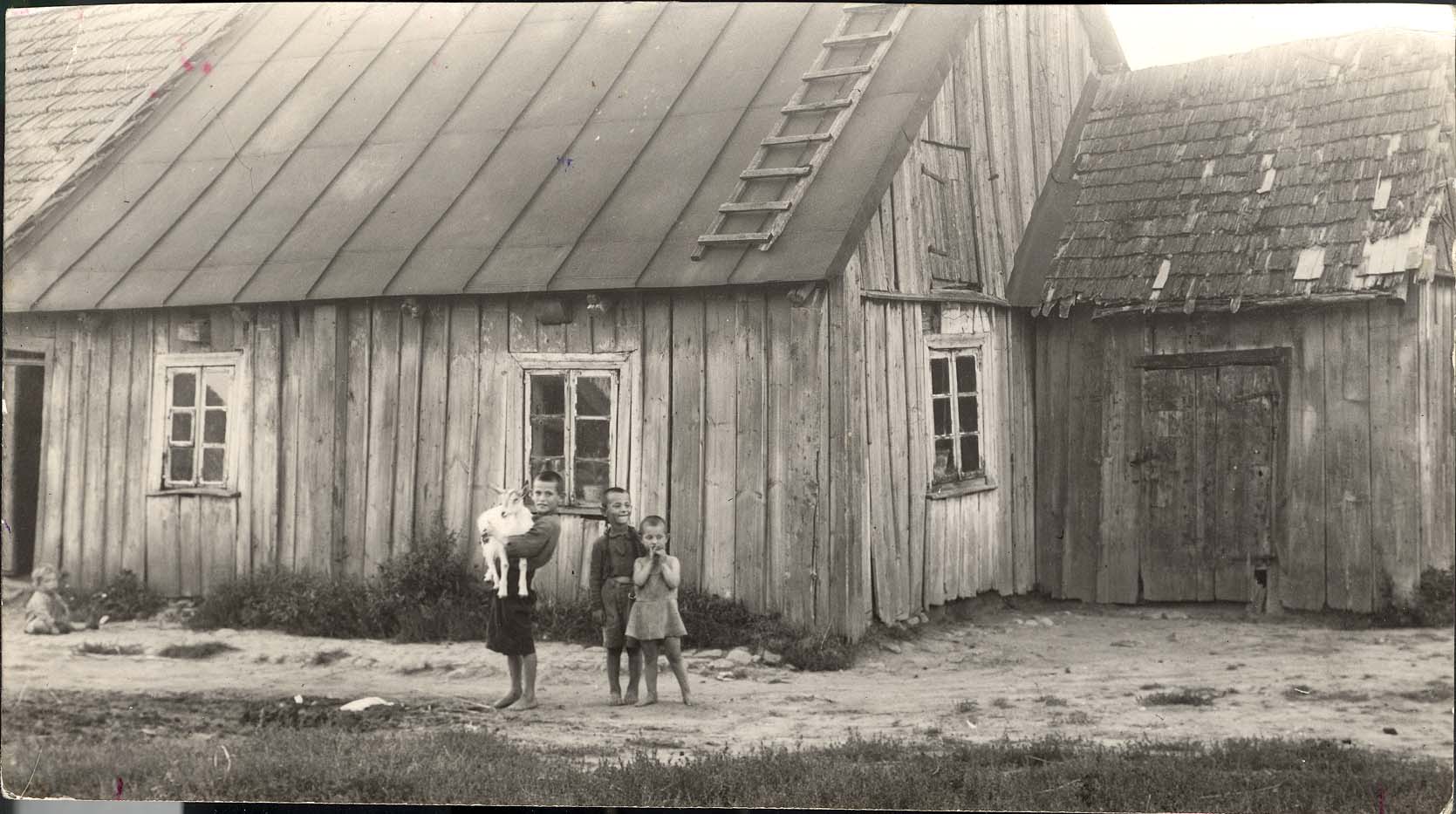
The establishment of the Jewish community of Skaudvilė seems to date to the mid-18th Century. In 1897, the town was home to 1,012 Jews, who made up 72 percent of the total population. By 1940, the number of Jews in Skaudvilė had dropped to 1,000 (or 50 percent of the total). At the time, most of them made their living from agriculture, commerce, the crafts, or small-scale industry.
In the interwar period, the Jewish community of Skaudvilė set up a Jewish bank ("Folksbank") and charity institutions, as well as a Tarbut school, a Talmud Torah, and a Jewish public library.
Following the outbreak of World War II and the German occupation of Poland, students from the Baranowicze Yeshiva found refuge in the town. In the summer of 1940, following the annexation of Lithuania by the Soviet Union, all private businesses in Skaudvilė, most of which were owned by Jews, were nationalized; Jewish political activity was banned, and the Hebrew school was closed down.
German troops entered Skaudvilė on June 22, 1941. A month later, the entire Jewish community was forced to assemble in an area where horses were kept. The Jews were held there until September 15, 1941, when they were shot.
The Red Army liberated Skaudvilė in the summer of 1944.
Skaudvilė
Taurage District
Lithuania
55.408;22.584
Photos
Victims' Names
Skaudvilė, Lithuania; children with a goat outside a wooden house